Thursday, 29 April 2010

A Fantastic Voyage

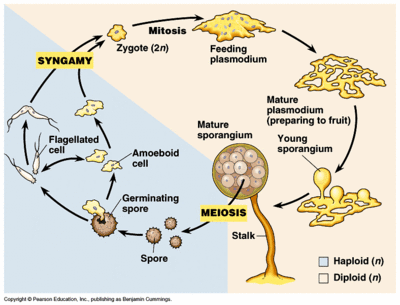
More emailing today. This time I wanted to clarify with Dr Klappa whether there were any restrictions on what type of slime mold to animate. (He showed the diagram of the cellular type but images of the plasmodial type in the presentation) I was happy to hear that there weren't any restrictions.

I've spent most of today, figuring out whats is going to happen in the life cycle. I had the decision of two main types and couldn't decide which. So I did some first draft story boards for both.

All these drawings, as you will see, are very rough so I'm going to describe them.

First Story board

In a forest
Camera pans down and zooms in on the log


Single cells start to come together atop of the log


The slug body begins to form as more cells join.


It was then at this point that I realised a few mistakes. One being that the scale was all wrong. The log should be a twig and the other being that I wanted the slug to travel to the top of the log, not already be at the top.


Story Board number 2


In the forest
The camera pans down on a twig and zooms in on it.


Revealing these single cells.
They start to combine.

They form a body as a slug
and slither up the twig


The slug morphs into the fruiting body and releases its spores into the forest, carried by the breeze

Picture 16 is supposed to be the spores pealing off of the outer bubble. (I don't know whether that is technically accurate, but I have as of yet to find out how the cellular fruiting bodies release their spores)


Story Board 3

This time I did the plasmodial slime mold.

The camera is positioned in the sky looking down into the forest.
Camera zooms in and twists at the same time.
Then it lowers down to just underneath the log (its a log this time)


The yellow slime mold is pulsing as it travels up the log. (spreading out) leaving a trail of veins

As it spreads out over the top of the log the slime mold begins to fruit all its bodies.

Then the camera is zooming as if through the trees, but with the fruiting bodies as the fruiting bodies themselves, grow.


Camera stops a this odd angle while fruiting bodies emit spores


Into the forest (same as last time)


Story board 4

This is the last one. (a cellular slime mold) I think I'm edging more to doing the cellular slime mold

In the forest
Camera pans down


The cells join together and form a slug which travels up the tree.

The slug reaches the top and joins with some other slug slime molds (not join in the sense of bonding together)

The camera does the fly through trees type shot as explained (probably not that clearly) in the previous story board.


Finishing with a close up of the tip of one fruited body
and it releasing its spores into the forest


I just scribbled two alternate ways of releasing spores on the side.
the left one showing the bubble exploding
the right one showing a spore breaking apart from the bubble like a rain drop.

I know these are probably the worst drawing you seen from me in a long while but I just had to get my ideas out before I forget them. I expect to finalise them over the weekend.


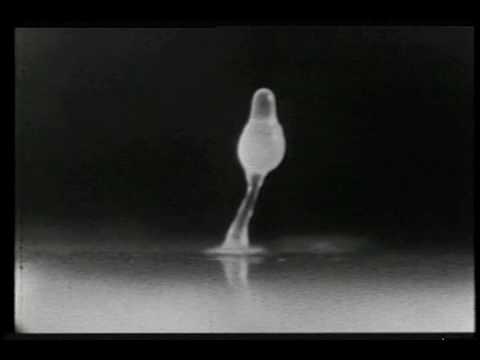
I thought I would post this video that shows how the slug like slime mold moves. It shows lots of dots swimming about inside the body. Jackie was the one that found it though.


Lastly I thought I would post my thoughts on the Fantastic Voyage (1966)


I thought it a mildly enjoyable film although simple in plot. A definitely watch once only film for me. Although I do admire the the effects and imagery. They may be cheep by today's standards but the saturated colours used inside the body gave it a rather 'stage play' feel to it, and just like most science videos I've seen, they don't skimp on colour.

The spaces and atmospheres did feel cave like and claustrophobic in a spacious sort of way. However, like Phil said about the plot, it was one disaster after another and I couldn't help but think that these delays were more irritating than entertaining.

Wednesday, 28 April 2010

Maybe Less is More

I emailed Dr Klappa the other day about what the yellow fluffy slime molds looked like before they became the fruiting bodies, as I couldn't seem to find any.

Whether or not they are always fluffy or whether they only go fluffy at the fruiting stage. He replied saying that he wasn't entirely sure and continuing to say that it probably goes fluffy at the fruiting stage.
At first I was thinking that I was stuck but after reading what Phil has also said on my previous post (about not there being any other CG slime mold videos out there), this has actually opened up more creative options as its all really down to how I interpret the diagrams on what it should look like.

Some more good news is that today, I have finished my Time Machine essay. (Its what I've been doing/finishing mainly over the last few days) So now I can concentrate entirely on this project.

During my lunch break I actually decided upon finding some images of woodland and logs etc as this is where slime mold appears to be most commonly found. In particular, trying to find photos from a slime molds point of view. I only found one of these but then I wasn't searching for that long anyway.


I also found a good detailed picture of some fallen logs with moss.


I think I've done enough visual research for the moment, having also looked at other blogs as well. Perhaps its time now to sketch out a few ideas. Maybe a rough storyboard.

Oh... and I also filled out the student survey.

Tuesday, 27 April 2010

Target Audience and a question for Phil

I had more or less decided that I would be targeting my audience to undergraduates as I wanted to create something reasonably sophisticated (as long as I have the time to do it!), but having seen that a few people have chosen GCSE as an audience, I was then thinking that, what I was thinking of, could match to that age group as well.

So I was wondering whether something aimed at 16+ would be what I'm aiming for as this would probably be understood by GCSE students. But anyway, that's what market research is for.


And so this is what I've been searching for.

I have found some cg animations of all sorts of blood cells, cells and other microscopic stuff. With imagery similar to the stuff seen in Fantastic Voyage what we watched today. Unfortunately I haven't found anything specific to slime mold (or any of the 4 topics) and I'm not sure I will as it's pretty specific.


I feel that I want to end up with an animation of similar quality to some of these videos (not total realism but no where near cartoony). Also bearing in mind that I don't want to be explaining any complex scientific stuff in my animation. I'm aiming for the visual experience to show clearly the life cycle of a slime mold. That is, no subtitles or very few (maybe a name or two but nothing heavily descriptive).


Just one important question. What do you mean by "not generic". Because I would have thought that undergraduates would be wanting to see technical accuracy (generic?) and GCSE would be looking for a more stylised approach and then characterised for junior school.

Monday, 26 April 2010

Slime Mold....

I've decided to go ahead with the life cycle of slime mold. In particular, starting from when the amoebas aggregate to them fruiting as its known as.


I have gathered together an initial collection of reference images as well as videos to get a better idea of what it is that I will be creating.


Sunday, 25 April 2010

Maya Tasks

Here are the latest Maya tasks.

The first is the double bounce walk cycle.


These are two simple arms, passing an object from one hand to another.


The completed spline rig. Click image to see the object hierarchy.


Here is the eye rig. I decided to do a little animation with this too.


Friday, 23 April 2010

A Standard to Uphold: Final Submission

This is my submission for this unit: Animation.

It is entitled: A Standard to Uphold.


Hand drawn entirely on paper, it demonstrates my growing abilities to communicate a story and produce an animation to a standard I hope to uphold... and hopefully improve on.

I am pleased with how its come out and thanks to everyone for all the positive feedback at the crit. I was actually slightly worried about what you would think about the sound. All the sound effects and music were very last minute and is probably the only thing that I am disappointed with. Not that I'm disappointed with how it sounds, just the fact that I ran out of time and didn't get the chance to work on it more.

One thing that bafels me is why the audio is ever so slightly out of sync with the video every time I export it, yet it plays fine in premiere. Honestly, premiere is useless.

Film reviews and a Timeline

We were shown a variety of animators on this project, from the well known to the not so well known.

The Brothers Quay produced some really surreal animations using stop motion animation. We were shown The Street of Crocodiles. It was dark grimy and nightmarish. Jiri Barta also used stop motion. We were shown the Club of the Abandoned. This showed theres abandoned maniquins living in this dark run down building. The repetitiveness enhanced this again nightmarish quality. I didn't particularly like either of these animations, but I suppose its usefully to see a wide variety of styles.

Rene Laloux is a 2D animator. We were shown the Fantastic Planet. I much preferred these animations. I felt like I had gotten sucked into this world that was created in this film. Although it did begin to drag towards the end.

The Tune by Bill Plympton was my favorite. A colourfull 2D animation; A bit Alice in Wonderland; about this guy who can't write the number one tune. he is taken on a dream like journey, meeting people and eventually coming up with the tune. It contained a lot of music sequences. This deep thinking character goes through this morphing phase, personifying his seemingly random thoughts.


Muybridge to Avatar Timeline


Muybridge 1830 - 1904

Most famous for photographing a galloping horse and proving that there is a point where all hooves are off

the ground. He continued using this photographic technique on other animals. He developed the machine

called the zoopraxiscope, which provided means of viewing a sequence of images to create motion.


J. Stuart Blackton 1875 - 1941


The first Stop Motion Animation. The Humpty Dumpty Circus in 1898.

He created the first cartoon animation "Humorous Phases of Funny Faces" in 1906


Winsor McCay 1871 - 1934

Created the animation "Gertie the Dinosaur" in 1914. The difference with this is that it has narrative.


Walt Disney 1901 - 1966

The first full feature length animation; "Snow White and the Seven Dwarfs" was made in 1937.


Nick Park 1958 -

Created the characters Wallace and Gromit in the first in a series of films A Grand Day Out in 1989. He

used the technique of stop motion to bring these clay models to life.


John Lasseter 1957 -

Toy Story was the first full length CG animation film created in 1995.


Avatar 2009

Not the first film to use motion capture techniques to animate the CG characters, but is extensively to perfection, translating the actors emotions through to the CG equivalents.

Animation Animatic

Here is my animatic. Better late than never!


Saturday, 10 April 2010

Just a Quick Update

I spent the last half of my day today on animating the final walk cycle of my aristocratic standard lamp. The pile of discarded and re drawn frames is a good cm thick... and all just to get nine perfect images. It was worth it in the end. I'm not showing it yet as it isn't finished. In fact, I'm not showing anything I consider final until the crit. I need to add the monocle and the wire that are meant to be attached to it and then that's the walk cycle done. The rest of the animation is coming along slow but steady.

Monday, 5 April 2010

Test Wire Animation... Important question for Phil

I've done this test animation of the wire unraveling.


Now when it comes to the final animation, when compositing the background and the foreground (or any other layers) together, does it matter that you can see the background through the foreground elements? I've just done a multiply blending mode on the wire layer (which basically makes white/gray transparent/semi transparent). Having to paint out the background frame by frame will obviously take a long time so is it OK to leave it as I've done in this test?

Friday, 2 April 2010

Life Drawing

This is the last two weeks of life drawing. The first week was all done in pencil. The second weeks drawings were all done in charcoal.

These first few drawings were a bit of a disaster. Trying to shade in a dressing gown covered in black and white stripes was a difficult task. They drawings look more like doodles. Oh well...


...Still, the rest came out better.


It took a while to get used to using charcoal (and getting messy) but by the third drawing with 1 hour and 5 mins to complete, I just decided to start smudging and blurring more, to get better shading. The last one is my favorite anyway.